
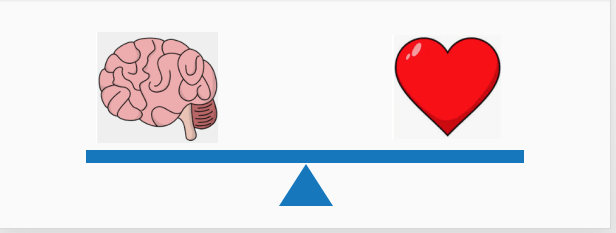
In last month’s Healthy Learning MTL blog, we talked about teaching effective leadership through goal setting. This month, we are going to be talking about teaching effective leadership through the development of emotional intelligence in anticipation of our presentation at The Study’s Student Leadership Conference on April 26th, 2019.
Part of effective leadership is being able to set goals, but effective leadership also has a strong emotional component. As we saw in last month’s blog, goal setting can be taught, but can we teach emotional intelligence? The answer is yes: emotional intelligence can be taught and improved.
What is emotional intelligence?
Emotional intelligence, also known as EI or EQ, is a concept popularized by Daniel Goleman in his 1996 book Emotional Intelligence: Why it can matter more than IQ. Emotional intelligence refers to the ability to be aware of, understand and manage our emotions and the emotions of others. It generally consists of four components: Self-awareness, self-regulation, empathy and relationship management.
Self-awareness
Self-awareness is the ability to be aware of and understand ourselves. It is foundational to emotional intelligence. That is, without the ability to be self-aware, we cannot effectively self-regulate, manage relationships, and demonstrate empathy for others.
How to teach self-awareness
Encourage students to recognize and identify their emotions. Prompt them to think about different types of emotions. You can even make it into a game by challenging students to come up with an emotion beginning with each letter in the alphabet (for an example, click link: https://www.teacherspayteachers.com/Product/abcs-of-emotions-poster-kinds-of-feelings-alphabet-801375).
Provide students with opportunities to self-reflect through journaling. Through self-reflection, students will be able to identify personal strengths and areas that need improvement. Here are some questions to prompt them with: What am I trying to achieve? What am I doing that is working? What am I doing that is not working? What can I do to improve?
Self-regulation
Self-regulation is an active extension of self-awareness. It is the ability to manage our emotions and behavior in accordance with the demands of a situation. It is the ability to calm ourselves down when we get upset or handle frustration without resorting to an outburst. It is also the ability to act in accordance with our deepest values regardless of how we feel.
How to teach self-regulation
Encourage students to examine their personal values. Encouraging students to examine their values will help them make informed behavioral decisions. Help them identify what their values are by engaging in a discussion about values (for an example, click link: https://www.commonsense.org/education/lesson-plans/understanding-our-personal-values)
Help students practice being calm. Encourage them to respond vs. react to situations. When we react, we say and do things automatically without considering the implications, which often makes the situation worse. Conversely, responding takes a more thoughtful approach to a situation. Just because we have an internal reaction, it does not mean that we have to act immediately. Demonstrate to students how to STOP – notice your reaction. BREATHE – take a deep breath and GO – consider the situation, acting in accordance with your deepest values.
Empathy and Relationship Management
Empathy is the ability to relate to and share someone else’s emotions, thoughts or experiences. Relationship management is an active extension of empathy – it is a person’s ability to manage and maintain healthy relationships.
How to teach empathy and relationship management
Help students to be able to consider another person’s perspective. Being able to take another person’s perspective is a skill which can strengthen empathy. You can teach perspective taking through storytelling. For example, you can have students take a fairytale and ask them rewrite the story from the villain’s character’s point of view, portraying him or her as a sympathetic character (for an example, click link: (https://www.pbslearningmedia.org/resource/transt.pd.lpempathy/developing-empathy-through-retold-fairy-tales/#.XLNrlpNKi9Y)
Help students practice active listening and validation. Active listening involves paying attention (listening actively, rather than passively hearing) to what is being said. Help students practice active listening by providing explicit strategies on how to listen actively (e.g., adjust body language to demonstrate that you are listening, paraphrase, ask questions, validate). Have students practice these strategies through role play (for an example, click: https://tc2.ca/uploads/TTT/Active_listening.pdf).
Additional Resources
Guide to Developing Future Leaders – https://www.weareteachers.com/developing-future-leaders/
Teaching Emotional Intelligence to Teens and Students – https://positivepsychologyprogram.com/teaching-emotional-intelligence/
How to Teach Self-Regulation – https://www.edutopia.org/article/how-teach-self-regulation
Nine Competencies for Teaching Empathy – http://www.ascd.org/publications/educational-leadership/oct18/vol76/num02/Nine-Competencies-for-Teaching-Empathy.aspx
40 Kindness Activities & Empathy Worksheets for Students and Adults – https://positivepsychologyprogram.com/kindness-activities-empathy-worksheets/#empathy
4 Proven Strategies for Teaching Empathy – https://www.edutopia.org/article/4-proven-strategies-teaching-empathy-donna-wilson-marcus-conyers

 Healthy Learning MTL